It sounds strange in a Texas summer, but an air conditioner can freeze solid. When the indoor (evaporator) coil ices over, airflow drops, the house warms up, and the melting ice can overflow the drain pan. The good news is that a frozen coil is usually a symptom of a fixable problem. Here is how to handle it.
Signs your AC coil is frozen
- Ice or frost on the copper refrigerant line near the outdoor unit or at the indoor unit.
- Weak airflow from the vents even though the blower is running.
- The system runs constantly but the house does not cool.
- Water around the indoor unit or in the auxiliary drain pan as ice melts.
How to thaw a frozen AC coil
- Turn cooling off at the thermostat. Running the compressor with a frozen coil can damage it.
- Set the fan to On. Moving warm house air across the coil speeds thawing. It usually takes 1 to 3 hours, sometimes longer for heavy ice.
- Watch for water. Put towels around the indoor unit and make sure the condensate drain is not blocked, because a lot of water is released as the ice melts.
- Replace the air filter while you wait.
- Do not chip at the ice. The coil fins and tubing are easy to puncture.
Once the coil is fully thawed, you can try cooling again. If it freezes again within a day or two, the underlying cause has not been fixed.
What causes an AC coil to freeze?
Restricted airflow
The coil needs a steady stream of warm air across it. When airflow drops, the coil gets too cold and moisture on it turns to ice. Common culprits are a clogged filter, closed or blocked vents, a dirty coil, a slipping or failing blower motor, or collapsed ductwork.
Low refrigerant
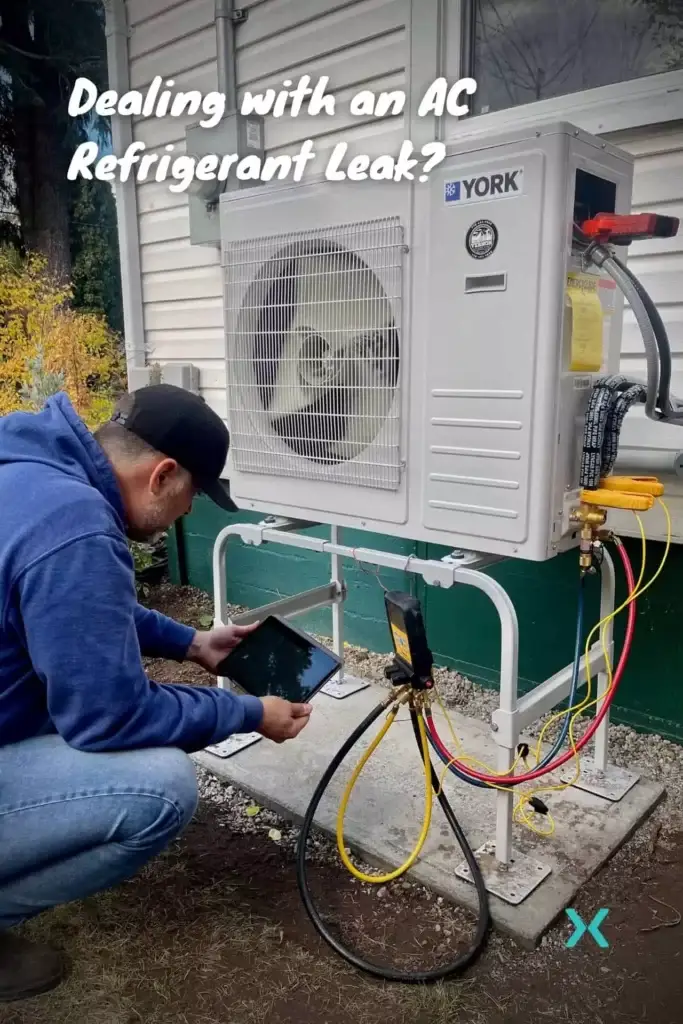
When refrigerant is low because of a leak, pressure in the coil drops and so does its temperature, often below freezing. This is a common cause in older systems. It requires a technician to find the leak, repair it and recharge the system correctly.
Running the AC when it is cool outside
Running cooling on mild nights, especially with the thermostat set very low, can let the coil drop below freezing. Most systems should not run in cooling mode when outdoor temperatures fall below about 60 degrees.
A dirty evaporator coil
Dust that slips past the filter builds up on the coil, insulating it and blocking airflow. A technician can clean it as part of routine AC maintenance.
Drain or blower problems
A blower running at the wrong speed, a failing motor or capacitor, or a clogged drain that lets water sit on the coil can all contribute.
How to prevent it from happening again
- Replace filters on schedule. See how often to change your AC filter.
- Keep supply vents and return grilles open and clear.
- Do not set the thermostat far below what the system can reach on a hot day. Very low set points do not cool faster.
- Schedule a spring tune-up so the coil, blower and refrigerant charge are checked before the heat arrives.
When to call a technician
Call if the coil refreezes after you replace the filter, if you see oil spots or hear hissing (both suggest a leak), if water is overflowing, or if the blower is not moving air. A frozen coil left running can lead to a much bigger repair, including compressor damage. Our AC repair technicians diagnose the cause, not just the ice.
Frequently asked questions
How long does it take a frozen AC coil to thaw?
With cooling off and the fan on, most coils thaw in 1 to 3 hours. Heavy ice can take longer. Let it fully thaw before turning cooling back on.
Can I run my AC if the coil is frozen?
No. Turn cooling off. Running the compressor with a frozen coil can damage it and will not cool the house.
Does a frozen AC mean it needs refrigerant?
Not always. Restricted airflow from a dirty filter, blocked vents or a weak blower is just as common. If it keeps freezing after the filter is replaced, have a technician check the refrigerant charge for a leak.
Is water around my indoor unit normal after a freeze?
Some extra water is expected as the ice melts, but it should drain away. Standing water or an overflowing pan means the drain may be blocked.
Need an HVAC technician in Dallas-Fort Worth?
CandelTech Services is based in Colleyville and serves homes across DFW, Monday to Saturday 7 AM to 9 PM, with 24/7 emergency service.