Few things are worse in a Texas summer than an air conditioner that runs and runs while the house stays warm. Sometimes the fix is a two-minute setting change. Sometimes it is a failing part that needs a technician. This guide walks through the most common causes in the order we usually check them, so you can rule out the simple things before you pay for a service call.
Safety first: turn the system off at the thermostat before you touch anything, and switch off power at the breaker or the outdoor disconnect before opening any panel. Never handle refrigerant lines or electrical parts yourself.
1. The thermostat is set wrong
Check that the thermostat is set to Cool, the set temperature is below the current room temperature, and the fan is on Auto. If the fan is set to On, it keeps blowing even when the AC is not cooling, which can feel like warm air. Replace thermostat batteries if the display is dim or blank, and check that a smart thermostat has not switched into an eco or away schedule.
2. A dirty or clogged air filter
A packed filter is the single most common reason a system struggles. It chokes airflow across the indoor coil, so less cool air reaches the rooms, and over time it can make the coil freeze. Pull the filter and hold it up to the light. If you cannot see through it, replace it. See how often to change your AC filter.
3. The outdoor unit is not running
Go outside while the AC is calling for cooling. You should hear the condenser fan and the compressor running. If the indoor blower is on but the outdoor unit is silent, the problem is usually a tripped breaker, a blown fuse in the outdoor disconnect, a failed capacitor or contactor, or a safety switch that shut the system off. A breaker that trips again right after you reset it is a sign to stop and call a technician.
4. A dirty outdoor coil
The outdoor coil releases the heat taken out of your house. In DFW it collects cottonwood fluff, grass clippings, dust and dryer lint. When it is caked, the system cannot shed heat and cooling drops off sharply on hot afternoons. Clear plants and debris to at least two feet around the unit. A gentle rinse from the inside out (with power off) helps, but a proper coil cleaning is part of a maintenance visit.
5. A frozen indoor coil
If you see ice on the refrigerant lines or the indoor unit, or the airflow from the vents is weak, the evaporator coil may be frozen. Turn cooling off and run the fan only until it thaws, then fix the cause (usually low airflow or low refrigerant). Our guide on a frozen AC coil explains what to do.
6. Low refrigerant from a leak
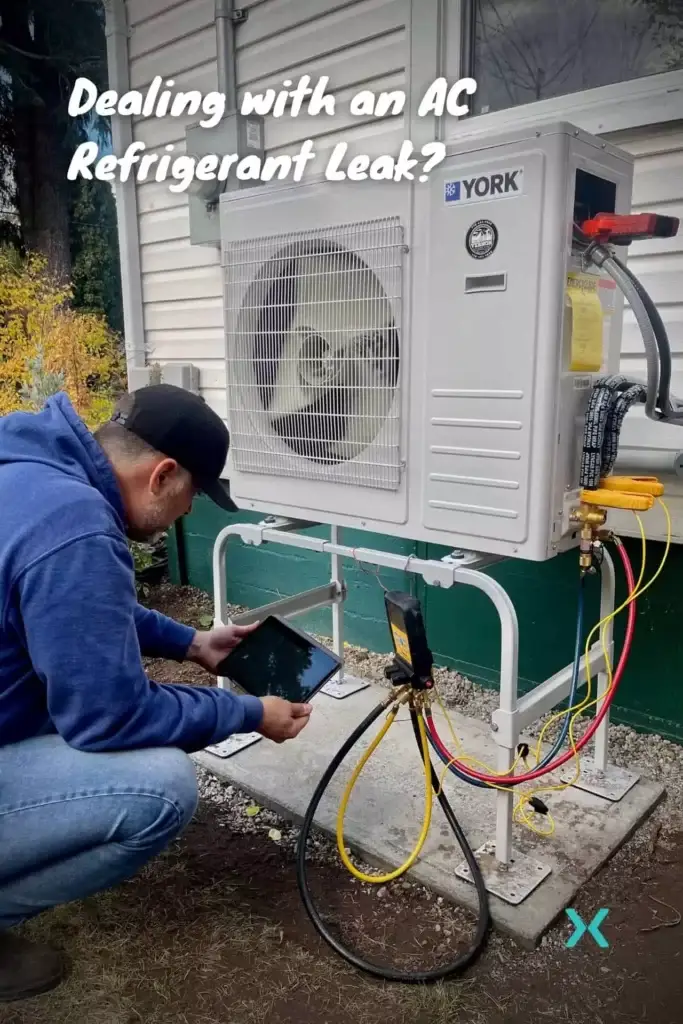
An AC does not use up refrigerant. If it is low, there is a leak. Signs include ice on the lines, a hissing sound, longer run times and higher bills. Topping off without finding the leak is a short-term patch. A licensed technician should find and repair the leak, then charge the system to the manufacturer’s specification.
7. Leaky or blocked ductwork
If some rooms are fine and others are hot, the ducts may be crushed, disconnected or leaking into the attic. In a DFW attic that can be 140 degrees in summer, a disconnected duct dumps your cooled air where it does nothing. Make sure supply vents and return grilles are open and not blocked by furniture. Persistent hot rooms usually need a duct inspection.
8. A failing capacitor, contactor or fan motor
Capacitors help motors start and run. They wear out faster in Texas heat and are one of the most common summer repairs. Signs include a humming outdoor unit that does not start, a fan that does not spin, or a system that starts and stops. These parts hold a dangerous electrical charge, so leave them to a technician.
9. The system is too small or worn out
An older system that has lost efficiency, or one that was undersized to begin with, may run constantly and still fall behind on 100-degree days. If your system is 12 to 15 years old and needs frequent repairs, it is worth comparing repair costs with a properly sized replacement.
What is normal on very hot days?
Most residential systems are designed to hold roughly a 15 to 20 degree difference between outdoor and indoor temperatures. On a 105-degree afternoon, a healthy system may run almost nonstop and the house may drift a few degrees above the set point, then catch up in the evening. A system that cannot get below 80 degrees indoors at night, or that blows air barely cooler than the room, has a problem.
When to call a technician
- The breaker trips again after one reset.
- The outdoor unit hums but will not start, or does not run at all.
- You see ice on the lines or the indoor coil.
- You hear hissing, grinding or loud buzzing.
- The air from the vents is not noticeably cool after you have replaced the filter and checked the thermostat.
Describing what you checked saves time on the call. Let us know whether the outdoor unit runs, whether you saw ice, and when the filter was last changed. Learn more about our home AC repair service.
Frequently asked questions
Why is my AC running but not cooling the house?
The most common causes are a clogged filter, a dirty outdoor coil, a frozen indoor coil, low refrigerant from a leak, or a failed capacitor that keeps the outdoor unit from running. Check the thermostat settings and filter first, then call a technician if the air is still warm.
Should I turn my AC off if it is not cooling?
If you see ice, hear unusual noises, or the outdoor unit is not running, turn cooling off to avoid damaging the compressor. You can run the fan only to help a frozen coil thaw.
Can I add refrigerant to my AC myself?
No. Refrigerant should only be handled by a licensed technician, and a low charge means there is a leak that needs to be found and repaired.
How much cooler should the air from my vents be?
On a working system, air at the supply vents is usually about 15 to 20 degrees cooler than the air going into the return. Much less than that points to a problem.
Need an HVAC technician in Dallas-Fort Worth?
CandelTech Services is based in Colleyville and serves homes across DFW, Monday to Saturday 7 AM to 9 PM, with 24/7 emergency service.